
What is Carpal Tunnel Syndrome?
Carpal tunnel syndrome (CTS) occurs when the median nerve—a major nerve that runs down the arm and into the hand—becomes compressed or irritated at the flexor retinaculum (also called the transverse carpal ligament). This ligament acts like a pulley, holding wrist tendons in place while offering essential stability. Approximately 1–5% of the general population will experience CTS at some point, with those aged 40–60 most at risk. Interestingly, females are three times more likely to develop CTS than males.
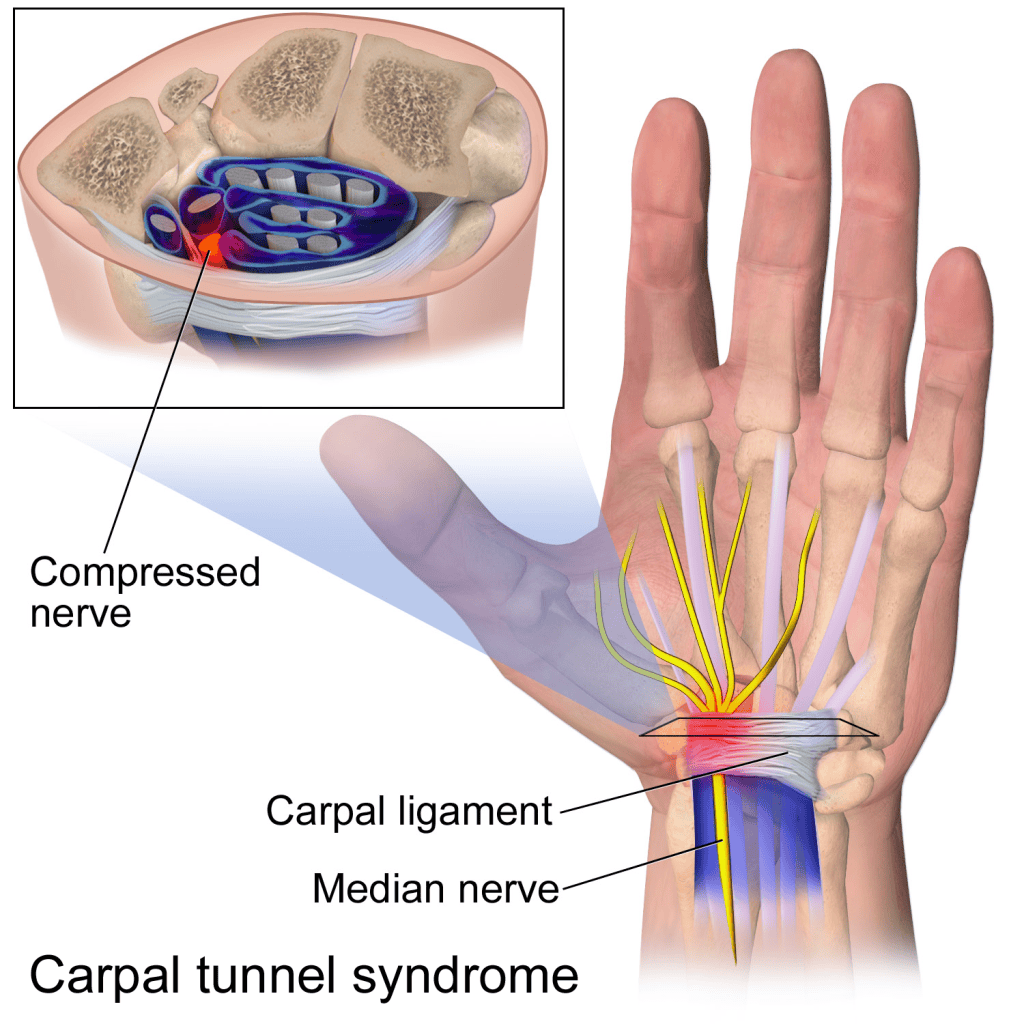
Common Causes of CTS
CTS doesn’t usually have a single cause—it’s often multifactorial. Some of the most common contributors include:
- Repetitive wrist movements (like typing or using tools)
- Mechanical trauma
- Increased pressure in the carpal tunnel
- Ischemic damage to the median nerve
- Nerve enlargement
People with diabetes, hypothyroidism, rheumatoid arthritis, or a wrist fracture are more likely to develop CTS. Genetics, occupation, and even certain environmental exposures can play a role too.
Recognizing the Symptoms
Since CTS affects the median nerve, typical symptoms include:
- Numbness, tingling, or pain in the thumb, index, middle, and half of the ring finger
- Discomfort in the wrist or hand, often worse at night
- Symptoms that may radiate up to the forearm and arm, but not the neck
- Trouble performing fine motor tasks like turning keys, buttoning clothes, or opening jars
- Thumb muscle weakness or wasting, which needs urgent medical attention
Without treatment, CTS can lead to permanent nerve damage, loss of dexterity, chronic pain, or even complex regional pain syndrome (CRPS).
Effective Treatments for CTS
Conservative Care
For many, physiotherapy is a great first step. It can include:
- Hands-on soft tissue massage and trigger point release
- Dry needling to relax irritated muscles (when appropriate)
- Median nerve gliding exercises to relieve nerve tension
- Load management and activity modification advice
- Patient education to promote healthy movement and reduce recurrence
Surgical Options
When conservative methods don’t relieve symptoms, surgery may be recommended. The goal is to decompress the median nerve by releasing pressure from the transverse carpal ligament. This is often effective, especially in severe cases or when symptoms have persisted for a long time.
What’s New in CTS Research?
Recent research has brought forward some exciting updates:
High-Tech Diagnosis
Peng et al. (2024) introduced an AI-powered ultrasound tool that matches expert radiologists in diagnosing CTS—super helpful in clinical settings.
Minimally Invasive Relief
Hydrodissection (fluid injection to separate the nerve from nearby tissues) has proven to be a safe and effective treatment, especially when traditional injections don’t work (Lam et al., 2023).
Power of Movement
A recent meta-analysis showed that nerve-gliding exercises significantly reduce symptoms and improve nerve function, though they may not increase grip strength (Neurodynamic Techniques Review Group, 2024).
Smarter Surgery
For those needing a second surgery, using the hypothenar fat pad (instead of other techniques) showed better outcomes (JPRAS Open Study Group, 2025).
Diabetes Alert
A massive study revealed that people with diabetes are nearly twice as likely to develop CTS (Sanjari et al., 2024). Monitoring symptoms early is key.
Tips for a Wrist-Smart Life
- Try median nerve glides regularly
- Avoid prolonged repetitive movements without breaks
- Use ergonomic tools at work and home
- Watch for early signs if you have diabetes or arthritis
- See a physio early to prevent complications
References
Lam, K. H. S., Wu, Y.-T., Reeves, K. D., Galluccio, F., Allam, A. E.-S., & Peng, P. W. H. (2023). Ultrasound‑guided interventions for carpal tunnel syndrome: A systematic review and meta‑analyses. Diagnostics, 13(6), 1138.
Peng, J., Zeng, J., Lai, M., Huang, R., Ni, D., & Li, Z. (2024). One‑stop automated diagnostic system for carpal tunnel syndrome in ultrasound images using deep learning. arXiv. https://doi.org/10.48550/arXiv.2402.12577
Neurodynamic Techniques Review Group. (2024). Neurodynamic techniques in the treatment of mild‑to‑moderate carpal tunnel syndrome: A systematic review and meta‑analysis. PubMed. https://pubmed.ncbi.nlm.nih.gov/38792377
JPRAS Open Study Group. (2025). Autologous nerve coverage in revision surgery for recurrent or persistent carpal tunnel syndrome: A systematic review and meta‑analysis. JPRAS Open, 43, 551–573.
Sanjari, E., Shahraki, H. R., Khachatryan, L. G., & Mohammadian‑Hafshejani, A. (2024). Investigating the association between diabetes and carpal tunnel syndrome: A systematic review and meta‑analysis approach. PLOS ONE, 19(4), e0299442. https://doi.org/10.1371/journal.pone.0299442
Leave a Reply